Posted on

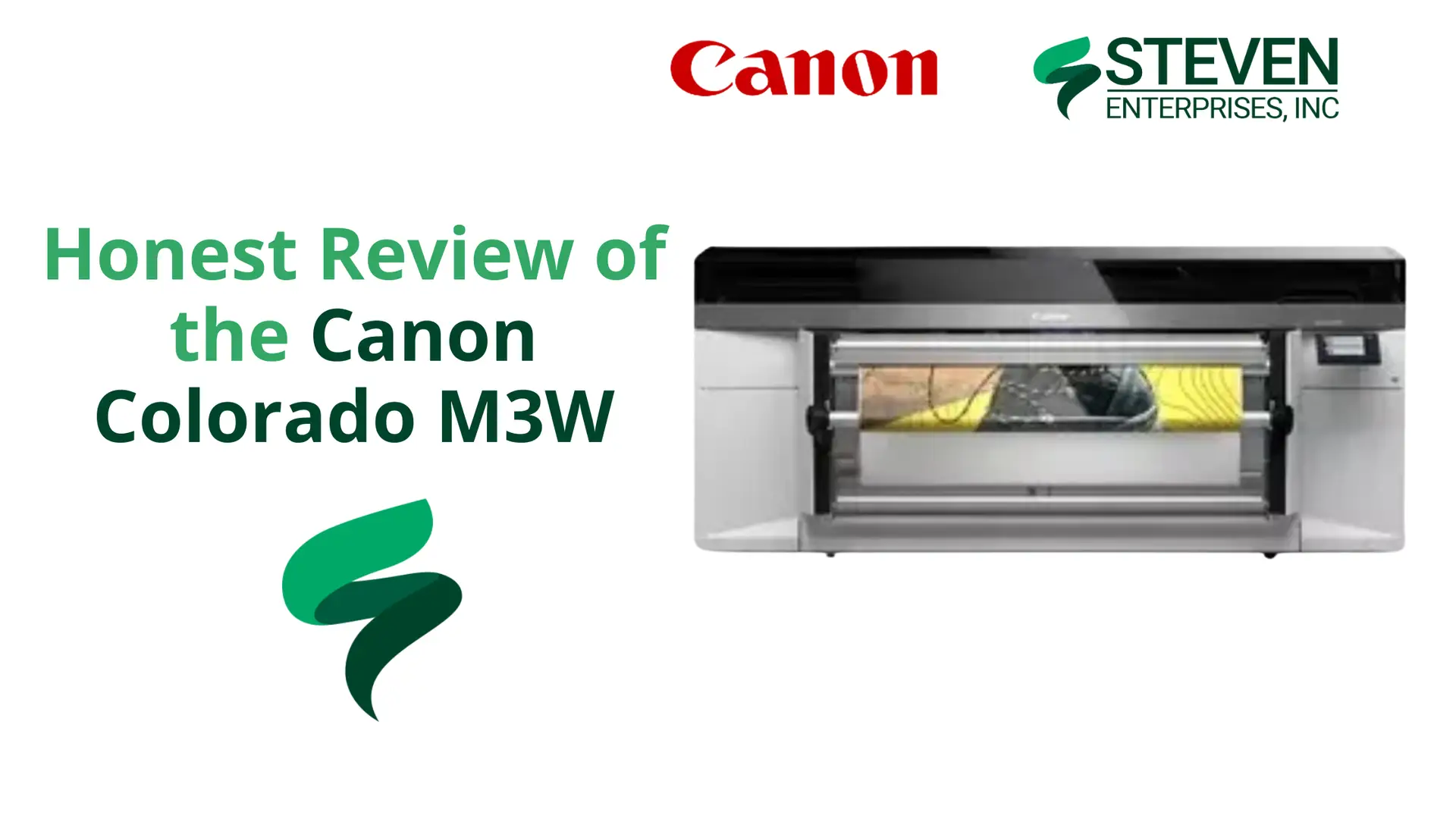
Honest Review of the Canon Colorado M3W

High-volume sign shops producing car wraps, outdoor banners, or custom wallpaper all have one thing in common. They’re all dealing with the challenge of creating durable, scratch-resistant prints that can withstand real-world abuse. 

The Canon Colorado M3W was built specifically to solve this problem.

At Steven Enterprises, we have tested many large-format printers, but the Canon Colorado M3W stands out for one reason. Durability.

It’s built for businesses that demand durability without compromise. This isn’t for small shops with occasional jobs—it’s a true industrial workhorse made for high-volume production.

Here’s our honest assessment of what the Canon Colorado M3W delivers, where it excels, and whether it’s the right investment for your operation.

What Makes the Canon Colorado M3W Different?

banner printing production example

The Canon Colorado M3W is a large format UVgel printer capable of producing a wide range of applications with high quality and durability. The “W” in the model name stands for white ink capability, which differentiates it from other Colorado machines and opens up entirely new application possibilities.

The printer uses Canon’s UVgel technology, which offers excellent color and dimensional stability, resulting in sharp, accurate prints. 

This technology is what sets the M3W apart from traditional solvent or latex printers, it creates prints that are instantly dry, scratch-resistant, and built to last.

Key Features of the Canon Colorado M3W That Matter for Your Business

The Colorado M3W introduces several standout features that differentiate it in the market:

UVgel Technology

Canon Colorado M-series

Canon’s UVgel technology powers the entire Colorado series.
Unlike solvent or latex, it uses gel-based UV-curable ink that sets on contact. UV LED lamps then cure the ink, delivering fast, durable, and vibrant prints without delay.

This provides instant drying (no waiting for outgassing), and results in robust, scratch-resistant prints with superior quality

UVgel prints have excellent color vibrancy and consistency, with precise dot placement and almost no dot gain or bleeding. 

The cured ink forms a smooth, thin layer that is flexible and won’t crack – Canon now specifies up to 185% stretchability for UVgel 460 inks, which is crucial for applications like vehicle wraps. 

Additionally, UVgel’s low curing temperature means you can print on heat-sensitive materials (like thin films or vinyl) without warping. 

White Ink

Canon Colorado M-series with Canon UVgel white ink

White ink is notoriously tricky in the printing world, often prone to clogging or settling in the lines. 

Canon tackled this by developing a white UVgel ink that is “the same as the CMYK” in terms of how it behaves. It circulates in the system to prevent settling, and the printer has automated maintenance routines to keep the nozzles firing (so you don’t need daily manual purges). 

As a result, Canon markets it as White ink without worry, allowing customers to use white ink hassle-free with spectacular results

In practice, having white ink expands your capabilities: you can print opaque white underlays on clear window film, make white text or graphics on colored media, or do multi-layer prints (e.g., color-white-color for backlit applications). 

FLXfinish+

FLXfinish+ lets you switch between a glossy finish and a matte finish on the fly, without needing to change inks or add a varnish. 

By adjusting the LED curing process, the printer can make the same ink either cure flat (matte) or shiny (gloss). 

You can even have mixed matte and gloss elements in one print for creative effects. 

For example, you could print a wallpaper with a matte background but gloss-highlighted text or logos, all in one pass. This “spot UV” look is achieved without an extra print step or coating. 

It’s a great way to differentiate prints and add value – something usually not possible on traditional solvent or latex machines. 

Impressive Media Versatility

The Colorado M3W handles an extremely wide range of media

The UVgel ink’s immediate curing means it doesn’t bleed on porous media and doesn’t distort thin materials. 

For companies that produce diverse products (wall murals one day, vehicle wraps the next, then decals or posters), having one printer that can handle all these applications is incredibly efficient. 

The Colorado’s output is also certified for indoor use – it has various environmental certifications (GREENGUARD Gold, AgBB, etc.) ensuring the prints are safe for hospitals, schools, or homes.

This is crucial for wall coverings and retail signage. Clients in these spaces expect odorless, low-emission prints for indoor environments.

Real-World Feedback from the Colorado M3W 

Partition Graphics (UK)

This company invested in a Colorado M3W to replace multiple older eco-solvent printers. Their managing director reports “The Colorado M3W is excellent for all our applications – from printing sophisticated fade effects and white ink on optically clear film to producing high quality wallcoverings, graphics, and vinyls. It really does everything we need.”

Overall, their experience shows the M3W delivering on its promises of quality, versatility, and productivity.

808Wraps (Hawaii, USA) 

808Wraps took on the challenge of wrapping a Tesla Cybertruck using the Colorado’s UVgel prints. They found that the vibrancy and durability of the prints were outstanding – critical for vehicle wraps which face sun, rain, and abrasion. “The prints are highly resistant to scratching and abrasion, and they withstood UV exposure, maintaining vibrancy even in Hawaii’s intense sunlight,” said the company’s CEO

The Colorado’s rapid output also helped them meet tight deadlines for high-volume projects, which is a huge factor in the vehicle wrap business where downtime = lost revenue. 

Moreover, because UVgel prints are dry and have stable dimensions, installers appreciate that panels align consistently edge to edge (no shrinkage), which is important when wrapping large vehicles or doing panelled wall murals. 

Canon has even gotten a 3M MCS warranty on UVgel wraps, meaning 3M backs the durability of wraps printed on the Colorado when using their approved materials.

Online Forum Feedback

In industry forums (such as Reddit and Signs101), early adopters have also shared candid opinions. 

One common theme is that the Colorado is an investment best suited for high volume usage “you need to run a fair amount of material to make use of it. [It’s] good color stability. [But] expensive.”

In other words, this printer shines in a production environment where it’s running many hours a day; small shops with only occasional large-format jobs might find it hard to justify the cost. 

Owners often highlight the printer’s color consistency and cost savings. The Colorado delivers reliable output, thanks to UVgel chemistry and automation. This consistency reduces print waste significantly.

And several users note that ink consumption per square foot is low – one user happily reported “the inks are cost effective” even while running large volumes of adhesive vinyl prints.

Some forum members compared the Colorado M3W with HP Latex printers (which are another popular choice for indoor/outdoor graphics and also offer white ink on certain models). 

One person pointed out that the Colorado’s modular upgrade path is a big advantage“unlike the HP, if you grow out of the M3 and want the M3W or the M5W, you just pay for the add-ons. That’s a lot cheaper than going from a Latex 700W to an 800W, etc.”

Who Stands to Gain the Most from the Canon Colorado M3W?

The Canon Colorado M3W is specifically built for:

  • Large Sign & Graphics Shops. banner printing production example

    If your shop produces a high volume of banners, retail signage, posters, window graphics, and trade show displays, the Colorado M3W was made for you. It can handle day-to-day sign printing at high speed, maintaining consistent color across long runs (important for big brand jobs). For instance, you could print dozens of retail posters or outdoor banners in a single shift and they’d all come out uniform and immediately ready to hem or grommet.

  • Vehicle Wrap & Fleet Graphics Producers.

    Car wraps, bus wraps, fleet decals, etc., benefit from the ink’s strong adhesion and color vibrancy. The prints stretch cleanly over rivets and curves and resist damage, even during vigorous repositioning and squeegeeing.

Vehicle and fleet branding companies can print wraps quickly and maintain consistent color from panel to panel with ease.

Fleet graphics in particular often require reliable repeatability – if you’re wrapping 10 vans with the same design, the first and tenth should look identical; the Colorado’s automation and stable output help ensure that.

  • Wallpaper & Wallcovering Manufacturers.

    Custom wallpapers and wallcoverings are growing in popularity, and the Colorado M3W meets this demand extremely well. It prints on PVC-free wallpaper, self-adhesive vinyl, canvas, and more—producing detailed, color-stable murals for interior spaces.

  • Point-of-Purchase Displays & Backlits.

    The retail POP market often demands premium quality and sometimes unique media like backlit films or clings. The M3W’s high resolution and color gamut deliver sharp, eye-catching point-of-purchase graphics that can elevate in-store displays. White ink lets you print double-layer graphics on clear film for vibrant lightboxes or window clings with impact.

  • Print Farms and Trade Print Suppliers.

    The Colorado M3W suits wholesale printers and print farms that need high output, reliability, and easy job management. The reliability and self-maintenance mean you can line up multiple jobs and let the machine go. With an efficient workflow, you could replace multiple slower printers with a single Colorado, reducing floor space and operator oversight.

The Bottom Line: Is the Canon Colorado M3W Right for You?

Of course, “honest review” means acknowledging the considerations: the Colorado M3W is a significant investment.

The Colorado M3W is not aimed at small sign shops or hobbyist use. Its price point and size only make sense if you have a steady stream of work. 

However, if you’re a small shop doing occasional projects or primarily indoor applications, the M3W might be overkill. 

The investment makes sense if you need features like scratch resistance, white ink, mixed finishes, and industrial durability.

For a closer look at this printer in action, you can watch this Canon’s official Colorado M-series Printer Virtual Demo.

Ready to Evaluate the Canon Colorado M3W?

Whether the Canon Colorado M3W is the right choice for you depends on your volume, application mix, and quality requirements.

Our team can assess if the M3W fits your needs and explain how it integrates into your workflow.

Call 800-491-8785 or fill out our contact form to speak with an expert about the Canon Colorado M3W today.

Posted on

Understanding Matte Polypropylene: Benefits & Price of Printing

Have you ever seen a roll-up banner at a trade show or a bright poster in a store window that looks almost like photo paper but tougher?

Well, there’s a good chance it was printed on matte polypropylene film.

At Steven Enterprises, we have seen increasing demand for matte polypropylene because it solves a fundamental problem. 

Why settle for mediocre print quality and short lifespan when you can have exceptional results that last for decades?

Here’s a practical look at why matte polypropylene tops the “best printing substrate” list and how to choose the right material for your next project.

What is Matte Polypropylene?

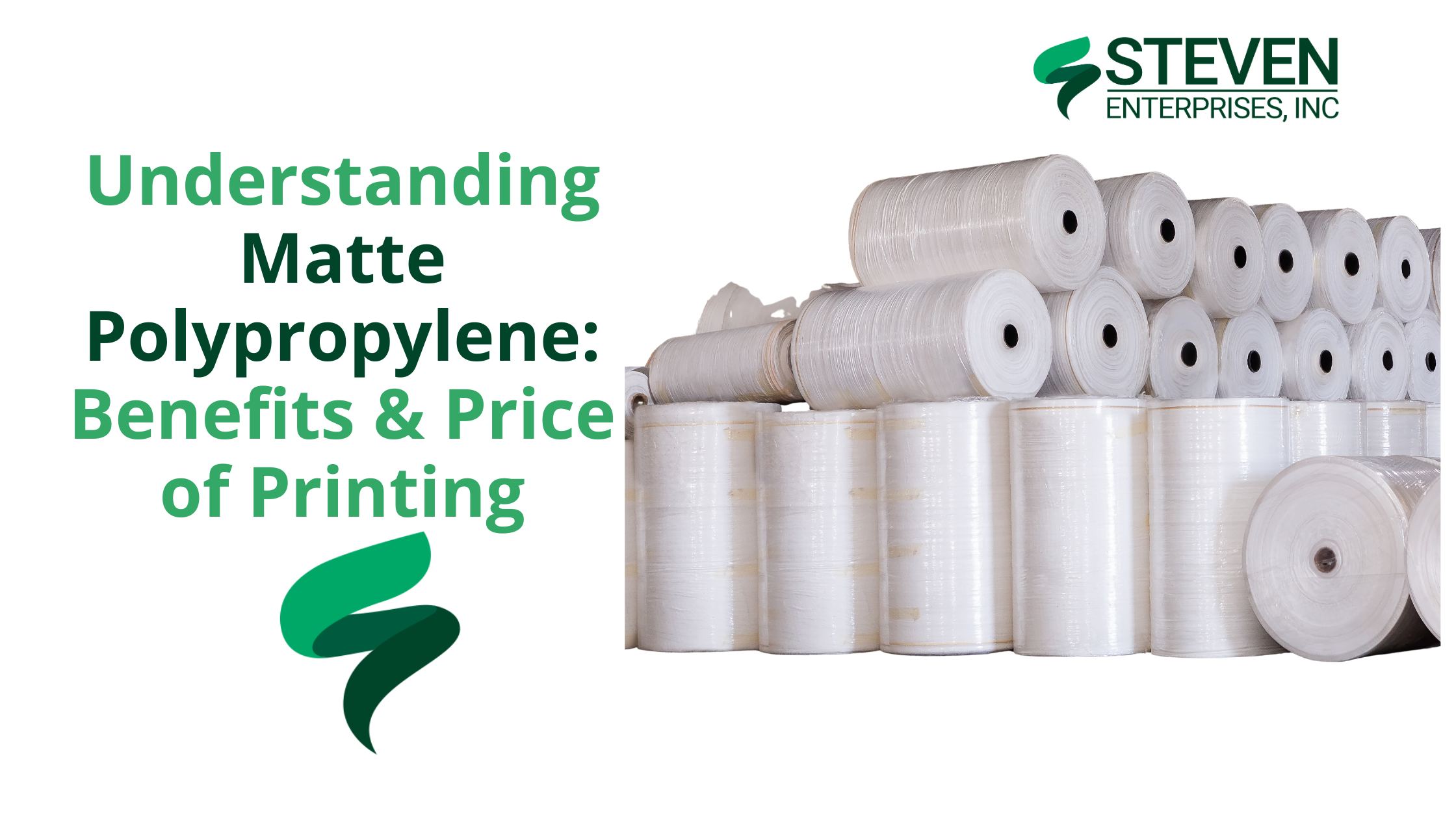
Matte polypropylene is essentially a type of plastic film – a semi-rigid thermoplastic material – that comes on rolls for use in wide-format printers. Unlike paper, polypropylene film doesn’t tear easily and can handle heavy ink coverage without curling or bleeding. 

The “matte” finish means it has a non-glare surface, which is great for display readability under bright lights.

Despite being plastic-based, it often has the look and feel of a thick photo paper once printed, delivering sharp detail and rich color but with added toughness.

Simply put, matte polypropylene combines the best of both worlds. You get high-quality image reproduction like a photo or poster paper, plus the durability of a synthetic banner. 

It comes in various roll widths (24″, 36″, 42″) with standard core sizes for easy printer loading.

This material works with large-format inkjet printers and supports all major ink technologies, making it compatible with most modern printers.

Benefits of Printing on Matte Polypropylene

Matte polypropylene has gained a reputation as a go-to media for many sign shops and print service providers, and for good reason. Let’s break down the key benefits:

1. Vibrant, High-Quality Print Results

One of the biggest advantages of matte polypropylene is the outstanding print quality it can deliver. The material’s coating is optimized for accepting ink, allowing for vivid colors and sharp detail

Because the finish is matte, your prints will have reduced glare but still maintain excellent color vibrancy. 

This makes the prints easy to view under various lighting conditions (for example, under harsh retail lighting or camera flash, you won’t get blinding reflections as you might with glossy posters). 

According to HP’s media specifications, their matte polypropylene film produces “displays with brilliant color and high-quality images” comparable to photo-quality output. You’re essentially getting a professional, polished look that can elevate any signage or display.

2. Durable and Tear-Resistant Material

Unlike paper which can rip or crease easily, polypropylene is a resilient plastic film that resists tearing and wrinkling. 

This durability makes it ideal for applications where people handle or transport the print frequently.

For example, universities and businesses often choose polypropylene for things like A-frame signs or banners precisely because it can withstand rough handling.

In practical use, you can handle polypropylene prints with confidence: roll them up for storage or shipping, mount them on foam boards, or use them in retractable banner stands without worrying about the media ripping at the edges. 

If you’ve ever struggled with a paper poster tearing during installation, switching to poly film is a game-changer.

Additionally, matte polypropylene has a moderate water resistance (since it’s plastic-based). 

This doesn’t mean it’s fully waterproof in all cases (the inks can still be a factor – dye inks, for instance, could run if water soaks them), but the substrate itself won’t turn to mush like paper.

3. Weather-Resistant for Short-Term Outdoor Use

Because of its durability, matte polypropylene actually holds up quite well for temporary outdoor applications

If you need a sign or banner outside for a few days, weeks, or even a couple of months, this material can do the job without immediately fading or tearing.

Keep in mind that short-term is the key term here – while polypropylene is weather-resistant, it’s not meant to replace heavy-duty vinyl for long-term outdoor signage. 

That said, if you need a sign to last all year outdoors in harsh sun, you would either laminate the polypropylene print or opt for a more robust vinyl. 

But for most temporary outdoor needs – like event signage, real estate signs, construction site notices, outdoor menus, etc. – polypropylene does a fantastic job. 

4. Compatible with Various Printer Ink Technologies

Whether you have a standard aqueous inkjet plotter (using dye or pigment inks), a latex printer, an eco-solvent or solvent printer, or a UV-curable (UV ink) machine, you can find a matte polyprop roll that works with it.

This is great for print providers because you don’t need special hardware to start using this material; your existing equipment likely supports it.

  • Aqueous Inkjet ( Dye/Pigment ) – Yes, there are polypropylene rolls with ink-receptive coatings specifically for water-based inks (often used in HP DesignJet, Canon, Epson SureColor T-series, etc.). They dry fast and give excellent results on pigment inks.
  • LatexHP Latex printers can print directly on polypropylene films made for latex – the material can handle the heat of curing and results are durable.
  • Eco-Solvent/Solvent – There are polypropylene media products designed for solvent and eco-solvent inks (used in Mutoh printers, etc.), which adhere well and are typically very durable.
  • UV-Curable/UV Gel – UV printers (including UV gel like Canon Colorado series) also have compatible polypropylene films. These inks cure on the surface of the poly film, producing very robust prints.

This wide compatibility means no matter what brand or ink technology your printer uses, you can likely take advantage of matte polypropylene. 

It also means if you’re a customer wanting to print something on poly, most print shops can handle it.

There’s no significant limitation like “oh you need a special machine for that”.

5. Eco-Friendly Advantages (Recyclability)

If sustainability is a concern, matte polypropylene has a couple of eco-friendly points in its favor compared to some other materials like PVC vinyl. 

Polypropylene is often recyclable – many polypropylene print films can be recycled through typical plastic recycling programs after use. (Always check local recycling guidelines though, as capabilities can vary by region.)

In contrast, traditional PVC vinyl banners are notoriously difficult to recycle and usually end up in landfills, plus the PVC manufacturing process can release more harmful chemicals. 

Polypropylene has a lower environmental impact in production and disposal. It’s a simpler polymer that reprocesses more readily and typically avoids the high toxic additives found in vinyl. 

Polypropylene prints don’t need lamination for short-term use, saving cost and reducing plastic waste.

You can recycle your promotional posters and banner graphics after campaigns instead of creating waste.

6. Cost-Effective Printing Solution

Cost is always an important factor in choosing a print media and this is an area where matte polypropylene shines. It provides excellent value for the quality and durability you get. 

Because it’s durable and water-resistant on its own, you often don’t need to laminate the prints for short-term use. 

Lamination is an extra step that adds material and labor cost. With poly film, you can usually skip it and still be confident the print will endure the needed lifespan.

Skipping laminate means the final product is cheaper and produced faster.

Similarly, if you were using plain paper for a poster, you might mount it to foam board or under acrylic for rigidity.

Bottom line: If you’re watching your budget but still need professional-looking, durable prints, matte polypropylene is often the smartest choice. 

Common Uses for Matte Polypropylene Prints

Canon Colorado M3

With numerous printing options available, selecting matte polypropylene makes sense when you need:


  • Superior print quality with brilliant colors
  • Long-term display permanence (50+ years indoor)
  • Tear resistance and durability
  • Compatibility with your existing ink system
  • Professional appearance for critical applications
  • Environmentally responsible material choice

Here are some of the most common applications where this material excels:

  • Retail and Point-of-Sale Displays. In-store posters, hanging signs, and POP displays often use polypropylene for its photo-like quality. It can endure being up for weeks or months.
  • Retractable Banner Stands: Those pull-up banner stand graphics at trade shows or events are frequently printed on matte poly film. It’s thick enough to stand straight and resists curling at the edges. It survives rolling in and out many times.
  • Event Signage & Directional Signs. For short-term outdoor events, conferences, or campus signage, polypropylene posters are ideal. You can use them in A-frame sidewalk signs or on stakes. They’ll hold up through the event, even if it’s rainy or windy. You can roll them up and reuse them later.
  • Trade Show Graphics. Beyond banner stands, poly film can be used for trade show booth graphics, backdrops, or mounted displays. It travels well due to tear resistance and prints in high resolution for a professional look.
  • Indoor & Short-Term Outdoor Banners. Need a banner for a grand opening or a sale that’s going to last a month outdoors? Polypropylene is a great choice for a temporary banner that doesn’t need the heft of a vinyl.
  • Maps and Technical Prints. GIS maps, architectural renderings, or technical posters are sometimes done on matte polypropylene for durability. Engineers can pin polypropylene maps at job sites without worrying about wind damage or water damage. 

The material can handle detailed line work and legends nicely and you can roll/unroll the maps multiple times.

  • Photographic Enlargements (short-term. For large photo prints in short-term displays like art exhibits, matte poly works well. It provides near-photographic quality that looks great throughout campaigns and handles much better than actual photo paper.

Find Your Perfect Matte Polypropylene Solution

When comparing printing materials, you’ll find matte polypropylene often gives you the “best bang for your buck.”

But determining exactly which specifications you need for your specific project requires expert guidance.

As authorized dealers and experts in wide-format printing, we can guide you on the ideal media for your needs. We also provide quotes on rolls of matte polypropylene or any equipment that will start your project.

Call 800-491-8785 or complete our contact form for your next matte polypropylene project. We can also help with compatible printers and inks.

Posted on 1 Comment

Toner vs. Ink Large Format Printers: Cost and Usage Comparison for Businesses

Comparison of toner and ink large format printers showing different supply costs

Choosing the right printing technology is crucial for optimizing your business’s operations and budget. 

One of the primary distinctions in large format printers is the type of printing technology they utilize—toner vs. ink large format printers.

So, if you’re just beginning your buying journey for a large format printer, the most critical question to answer early on is, “Should I be shopping for a toner-based large format printer and an ink-based large format printer?”

In this blog post, we’ll explain the main differences, ensuring you make an informed decision that aligns with your business needs.

Understanding the Core Differences Between Toner vs. Ink Large Format Printers

What Sets Toner Apart from Ink? 

Toner vs. Ink Large Format Printer supplies

Toner and ink serve the same fundamental purpose—creating images and text on paper—but their methods and outcomes vary greatly.

Inkjet printers use liquid ink sprayed in microscopic droplets onto paper, ideal for high-detail graphic outputs. 

Conversely, laser printers use fine powder toner that creates durable and fast-drying prints through a heat transfer process.

Understanding Composition & Quality Differences

Ink formulations typically include a blend of dyes or pigments and various additives that enhance printing quality and maintain ink fluidity. 

On the other hand, toner is a polymer-based powder that offers precision and efficiency and is especially suited for high-volume printing tasks.

Evaluating the Advantages and Disadvantages of Ink and Toner

Advantages of Using Ink in Large Format Printers:

  • Cost-Effectiveness for Lower Volumes: Inkjet printers generally have a lower upfront cost than ink-based printers, making them ideal for businesses with less intensive print needs.  
  • Superior Image Quality: Inkjets produce vibrant images with excellent detail, perfect for artistic and photographic applications.

Challenges with Ink-based large format printers

  • Maintenance Needs: Ink can dry out or clog the printing mechanisms if not used at least weekly, requiring regular maintenance. During COVID, many businesses had to purchase a brand new print head since repairing a clogged print head is almost impossible.
  • Higher Cost Per Print: While ink cartridges are cheaper, they yield fewer pages than toner, increasing the overall cost per print in high-volume environments.

Choosing Between Toner vs. Ink Large Format Printers

The decision between toner and ink ultimately hinges on your specific printing requirements:

For Low Volume Needs = Ink-based printers

If your monthly print needs are below 10,000 square feet, inkjet large format printers might be the more cost-effective choice despite the higher cost per square foot ($0.025) due to their lower upfront costs and high-quality outputs suitable for detailed designs.

For Higher Volume Requirements  = Toner-based printers

Toner-based large-format printers are more advantageous for volumes between 10,000 and 20,000 square feet per month. Toner’s cost efficiency ($0.011 per square foot) becomes evident in larger-scale operations, offering significant long-term savings.

To be clear, it’s rare for a business to have the minimum print volume required for a toner-based printer. For most companies in Southern California, purchasing this machine doesn’t make financial sense since the upfront costs are much higher. 

Making the Right Choice for Your Business

Selecting between ink and toner for your large format printing needs depends on various factors, including your typical print volume, the quality of prints required, and overall budget considerations. Both ink and toner have distinct advantages that can effectively serve different business needs.

To navigate these choices and find the perfect match for your business, consider consulting with a large format printing expert. 

At Steven Enterprises, we specialize in guiding businesses through these decisions, ensuring you invest wisely in technology that meets your specific requirements.

Book your free consultation by either filling out this form to have our experts contact you or calling us to talk to someone immediately at (800)491-8785.

Posted on 1 Comment

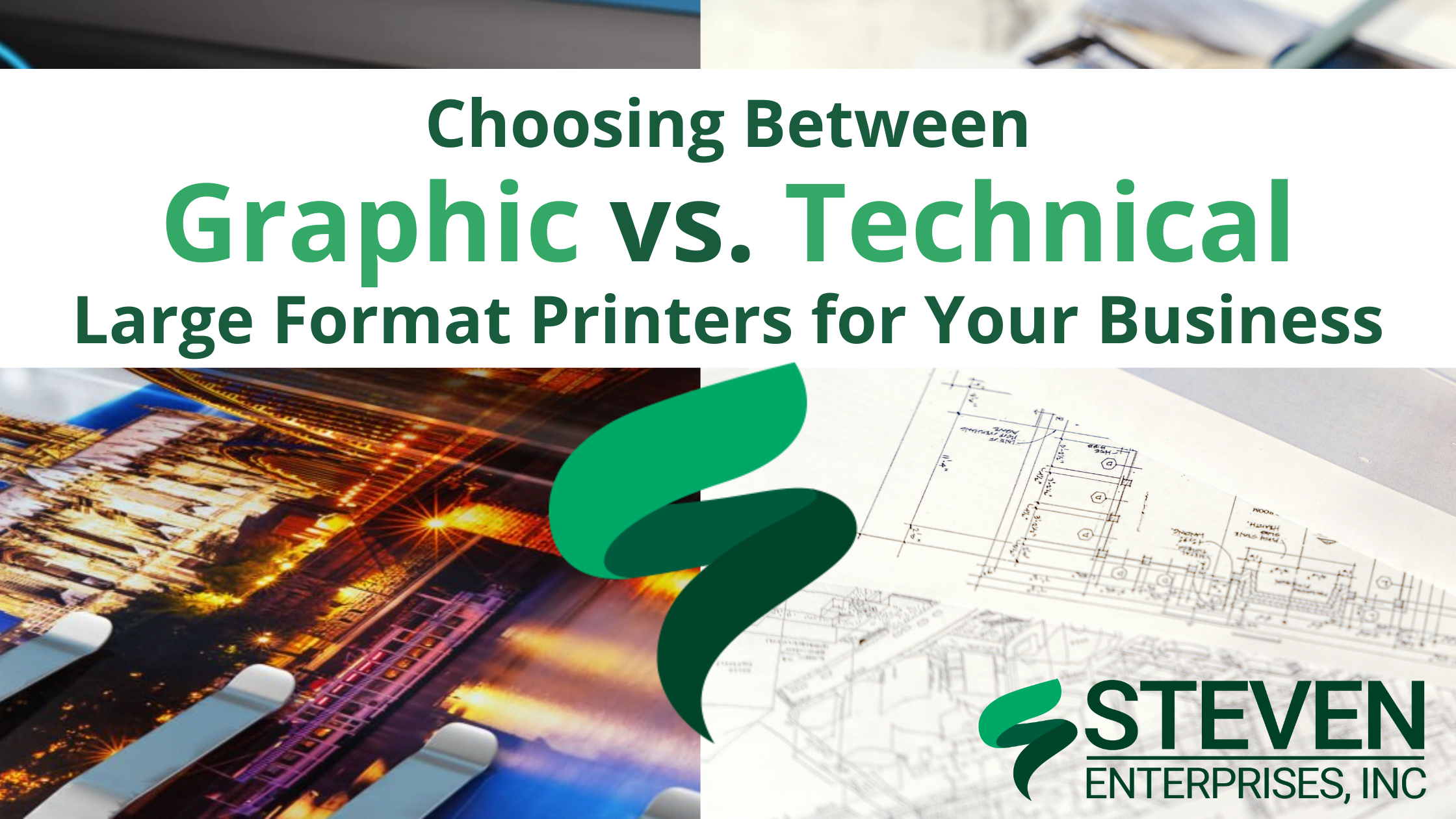
Choosing Between Graphic and Technical Large Format Printers for Your Business

Choosing Between Graphic and Technical Large Format Printers for Your Business

In today’s professional printing landscape, the choice between Graphic Large Format Printers and Technical Large Format Printers presents a pivotal decision for businesses. 

Each category caters to distinct needs across various sectors, from marketing to engineering. 

Our authorized service technicians at Steven Enterprises delve into the essence of these printers, highlighting their unique attributes to guide you in making an informed decision for your business.

Understanding Graphic and Technical Large Format Printers

The divide between Graphic and Technical Large Format Printers is not just about the output; it’s about catering to the specific needs of different industries. 

Graphic printers are the go-to for producing visually captivating materials for advertising, photography, and entertainment. 

In contrast, Technical printers are designed for precision and accuracy, serving as essential tools for architecture, engineering, and construction professionals.

Types of Businesses Who Use Each Printer

The utilization of these printers varies significantly across industries. 

Graphic Large Format Printers are preferred by sectors that demand high-quality visual presentations, such as:

  • Marketing agencies
  • Photography studios
  • Graphic design firms

On the other hand, Technical Large Format Printers are indispensable in fields requiring detailed drawings and plans, like:

  • Architecture
  • Engineering
  • Manufacturing

Key Differences Graphic vs. Technical Printers

1.  Functionality and Application

When it comes to functionality, Graphic Large Format Printers shine with their ability to produce vibrant, detailed outputs, making them ideal for creating banners, posters, and high-quality photographs. 

Technical Large Format Printers excel in producing precise line drawings and blueprints, prioritizing accuracy and clarity for technical documents.

2. Image Quality and Output Space Comparison

While Technical Large Format Printers boast higher resolutions for crisp and clear document reproduction, Graphic printers offer versatility in media types and design flexibility. 

This difference underscores the importance of choosing a printer based on the specific output requirements of your business.

3. Cost Considerations

Evaluating the cost involves looking beyond the initial purchase price to consider long-term operational expenses. 

Technical printers, though potentially higher in initial cost, tend to offer more economical long-term use due to their media compatibility. 

Conversely, Graphic printers might seem more budget-friendly upfront but can lead to higher ongoing costs because of the diverse media they accommodate.

4. Speed and Efficiency

Recent technological advancements have minimized the speed disparities between Graphic and Technical Large Format Printers. Today’s technical printers match the rapid output of graphic models, ensuring businesses can maintain high productivity without sacrificing print quality.

Most Popular Large Format Printer Brands 

Brands like Canon, Mutoh, HP, and OCE dominate the large format printing market, each offering models suited to either graphic or technical applications. 

For graphic printing, there are two high-quality HP models we find to be great for multi-functional use: 

For graphic printing outdoor prints and banners, as well as indoor wall paper, we typically recommend Canon & Epson. There are the most popular printers: 

  • Canon Colorado M Series:
    • 64’’ UV Gel Printers
    • 1650 64’’ UV Gel Printers
  • Epson P Series 
    • SureColor P8570D 44-Inch Printer
    • Surecolor P9570 44’’
    • Surecolor P2000 44’’

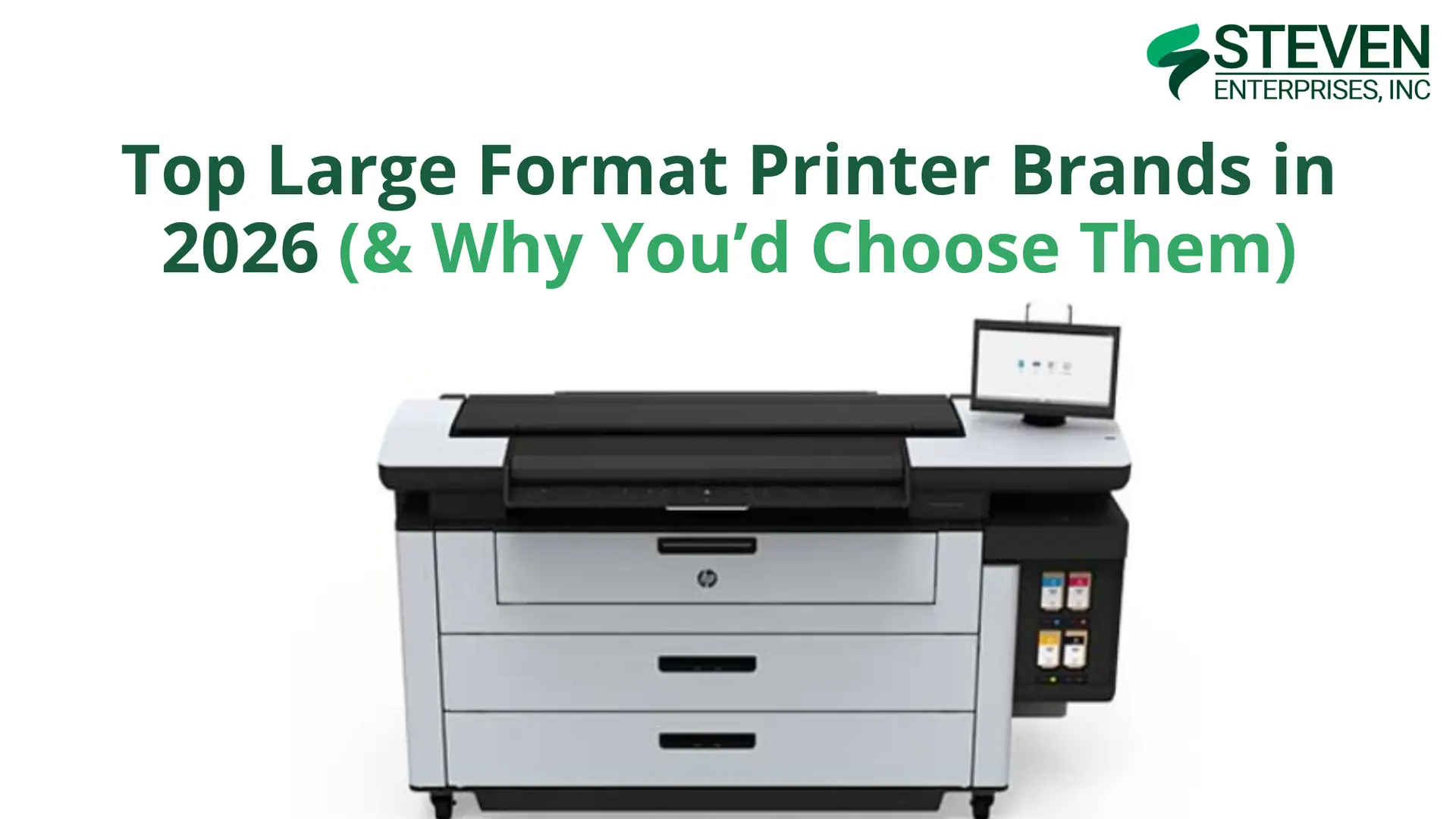
For technical needs, the HP PageWide XL series are going to be your best printers. Check on the wide-variety collection of HP PageWide XL printers here

Should you be a little more cost-conscious, we’ll typically recommend that you explore the OCE printers. They’re highly recommended for their efficiency and reliability, without breaking the bank.

Need Help Choosing the Right Large Format Printer for Your Business?

Selecting the right Large Format Printer is crucial for aligning with your business’s specific needs, whether prioritizing visual impact or precision. By assessing factors like image quality, cost, brand reputation, and speed, you can make a choice that propels your business forward.

For personalized advice on selecting the ideal Large Format Printer for your business, our team of experts is ready to assist. Contact us today to enhance your printing capabilities to new heights.

If you need help choosing the right printers for your business, contact our team of experts here or give us a call at (800)491-8785.